UV Curing Technology: How It Improves Efficiency in Industrial Manufacturing

In modern manufacturing environments, efficiency, product quality, and environmental responsibility are key priorities. Ultraviolet (UV) curing technology has become an increasingly important solution for industries that rely on coatings, inks, adhesives, and finishes. By using high-intensity UV light to initiate a photochemical reaction, UV curing systems provide a fast, reliable, and cost-effective alternative to traditional heat-based drying methods.

How UV Curing Technology Works

UV curing is a photochemical process in which ultraviolet light triggers a reaction within specially formulated materials such as inks, coatings, and adhesives. When exposed to the appropriate UV wavelengths, photoinitiators within these materials absorb the energy and rapidly initiate polymerization, causing the substance to harden almost instantly.

The effectiveness of UV curing depends on several factors, including lamp intensity, wavelength, exposure time, and the formulation of the material being cured. When properly configured, UV curing systems deliver consistent and uniform results across a wide range of applications.

Increasing Production Speed

One of the most significant advantages of UV curing technology is its ability to dramatically reduce processing time. Unlike traditional heat curing methods, which may require extended drying periods, UV curing occurs almost instantaneously.

This rapid curing process allows manufacturers to:

  • Increase production throughput

  • Reduce bottlenecks in production lines

  • Minimize work-in-progress inventory

  • Accelerate time to shipment

Because products are fully cured immediately after exposure, they can move directly to the next stage of production without delay.

Improving Product Quality

UV curing also contributes to improved product quality and consistency. The controlled curing process reduces the likelihood of defects that can occur with slower drying methods, such as uneven finishes, contamination from airborne particles, or surface imperfections.

In addition, UV-cured materials often exhibit enhanced durability, including improved resistance to abrasion, chemicals, and environmental factors. This makes UV curing particularly valuable in applications where long-term performance and appearance are critical.

Reducing Environmental Impact

UV curing technology offers several environmental benefits compared to conventional curing systems. Because the process does not rely on solvents or high heat, it significantly reduces emissions of volatile organic compounds (VOCs) and eliminates the need for extensive ventilation systems.

Other environmental advantages include:

  • Lower energy consumption compared to heat-based systems

  • Reduced waste due to fewer defects and rework

  • Minimal heat generation, improving workplace conditions

  • Elimination of harmful byproducts associated with solvent-based processes

These benefits make UV curing an attractive option for manufacturers seeking to meet environmental regulations and sustainability goals.

Applications Across Industries

UV curing is used across a wide range of industries due to its versatility and efficiency. Common applications include:

  • Printing and packaging, including inks and coatings

  • Automotive and aerospace components

  • Electronics and electrical assemblies

  • Medical device manufacturing

  • Wood finishing and decorative coatings

Each of these industries benefits from the ability to achieve rapid curing while maintaining high standards of quality and performance.

Advancing Manufacturing with UV Curing Solutions

As manufacturing processes continue to evolve, UV curing technology is playing a key role in improving efficiency and product outcomes. Its ability to deliver fast, consistent, and environmentally responsible curing makes it a valuable solution for a wide range of industrial applications.

Ongoing advancements in UV lamp design and system integration are further enhancing the capabilities of curing systems. Manufacturers specializing in UV lamp technology and OEM solutions continue to support innovation in this space by developing high-performance systems tailored to the needs of modern production environments.

UV Polymer Curing

UV Polymer curing is a process that uses UV light to alter the properties of a polymer, or photopolymer.  A photopolymer is the term for a polymer that responds to UV light, which is basically invisible electromagnetic radiation.  When a photopolymer, which can be a variety of resins, is exposed to the UV radiation, it will typically harden and seal, creating a strengthened surface or an unbreakable bond.

UV Polymer Curing Applications

UV Polymer curing is used in many industrial applications to instantly dry ink or to create a hardened surface without use of solvents or chemicals.  Some common examples of useful applications include:

  • Adhesive Bonding

  • Inks / Varnishes / Lacquers

  • Decorative Glazes

  • Coatings

  • Label Printing

  • Graphic Designs

  • Disinfection of Medical Equipment

These are just a few of the many industries that are using UV lamps for curing various polymers.  There are many additional applications for UV curing, and more and more businesses are seeing the benefit of this process.  UV curing was first introduced in the 1960’s, and it is increasingly being adopted by companies as there are many advantages over prior methods of curing polymers.

Curing Lamps

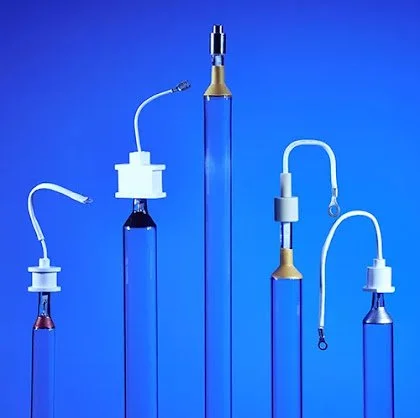
There are three types of UV lamps used for UV polymer curing.  High Pressure UV (HPUV), Medium Pressure UV (MPUV), and Amalgam Lamps.  High Pressure (HPUV) curing lamps are also referred to as Metal Halide lamps, and use mercury with short wavelength outputs.  The HPUV lamps are typically used for the altering of polymers by hardening resins in many of the applications mentioned above.  Medium Pressure lamps (MPUV) are often used for water and air disinfection purposes, while Low Pressure Amalgam lamps are typically used for curing catatonic inks which are inks that are typically an epoxy based resin and respond to UV lighting.  LightSources and our European partner, LightTech, are proud to have pioneered new pellet technology for amalgam lamps.

There are so many benefits to using UV lights for curing it will be difficult to list them all.  We can begin with efficiency.  Imagine a conveyor belt full of parts passing under a UV light as they head to their next destination, possibly quality inspection or packaging.  While no one touched the parts, sprayed solvents on them, or even laid eyes upon them, they underwent a very important process.  Just by passing under the lights, the surface was hardened and strengthened, a strong scratch-resistance texture was enhanced, and any printing or graphic design needing reinforcement was just instantly dried and strengthened.

Now imagine a different manufacturer that does not use UV curing.  They must have an assembly line with people spraying solvents on the parts, requiring face masks and ventilation and still exposing the employees to harmful chemicals in the air and on the skin.  This also opens the door for human error, uneven coating, and inconsistency.

As you can clearly see from these two examples, the efficiency of UV curing is definitely one of the most valuable benefits.  This efficiency also leads to increased production speeds as several parts can be treated at once simply by passing under a row of the proper high intensity UV lighting.   Choosing to cure your parts with UV lighting will increase your output dramatically, while not requiring an investment in an increased labor force, workstation for an added process, or supplies of chemicals that are most likely harmful to the environment.

In addition to efficiency and cost savings, consistency is another big advantage of using UV curing over any other process.  With UV lighting, the amount of exposure is constant, and consistent.  There is no chance of human error in applying an outer coating unevenly on a large amount of parts.  This consistent process results in less quality issues such as internal rejects and the worst rejects of all, customer returns and complaints.   A consistent process is something that all quality minded OEM’s are searching for as consistency results in superior quality, time and again.

Efficiency and consistency are and should always be a top consideration for any production process, (both result in increased profits), but let’s not forget an even more important benefit – the health and safety of your workers and the environment.  Simply by using UV radiation to cure your parts, you are saving your employees from inhaling harmful chemicals, you are not emitting pollutants into the air, and you also do not have to worry about properly storing or disposing of such harmful chemicals.   Any chemical substance on a worksite must be handled with proper storage and disposal guidelines, while maintaining material safety data sheets on the chemical or solvent.

Not only does the increased efficiency and consistency provide an instant return on your investment and a quick increase to the bottom line, not purchasing, storing, disposing of or documenting alternative substances is also a huge savings, and instant increase in profitability.

With all of these benefits, it is difficult to imagine why a manufacturer would choose an alternative method over UV polymer curing.   Efficiency, consistency, safety, less regulations, increased profits, and last but not least – longevity.   LightSources UV curing bulbs will retain their energy output up to 90% of their end of life cycle, enhancing and prolonging all other financial benefits.  As we all know, time is money.  Less time spent processing parts, or replacing bulbs, is an immediate increased profit.

LightSources in the United States, and our European partner, LightTech, provide quality custom UV bulbs to OEM’s large and small all over the world.   If one of our standard sizes does not fit your application, contact us to see how we can assist you in providing custom built bulbs for your required process.   LightSources and LightTech are also the only manufacturer to offer universal installation.   Our lamps can be installed either horizontally or vertically while maintaining equal efficiency.  This feature is exceptionally critical when applying the UV polymer curing process to three dimensional parts, allowing an even exposure to the UV radiation reaching what were previously hidden dimensions.

LightSources in the U.S. and our strategic partner in Europe, LightTech represent the leading high-tech designers and manufacturers in the lamp industry today.  Our products are used world-wide in a multitude of applications and industries such as our UV air treatment systems that offer patent-protected, OEM-oriented solutions.  We invite you to contact us to learn more about our wide selection of lamps.